Validation of NASA-SMAP Soil Moisture Estimates Using NEON’s In Situ Soil Moisture Measurements
Challenge
As part of its Soil Moisture Active Passive (SMAP) mission, NASA monitors soil moisture levels and freeze/thaw conditions across the globe using satellite orbiting. To help validate and calibrate these satellite data, NASA relies on direct measurements taken by partners on the ground and formed a collaboration with Battelle to add the National Ecological Observatory Network (NEON) field sites to its validation network. At the NEON sites, Battelle must develop a consistent soil moisture time series that can be incorporated in the SMAP network.
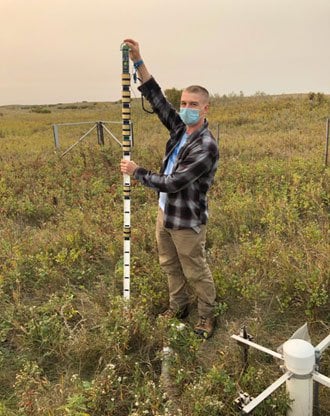
Sr. NEON Technician, Matthew Wenzel, inserting a soil moisture sensor into a soil plot.
Solution
- Began collection on a single site and limited time frame as a proof-of-concept
- Developed code to reprocess all the NEON data using consistent calibration coefficients to remove artificial noise.
- Currently evaluating the reliability of all the measurement locations to determine the most reliable and best suited for incorporating into the SMAP validation network
Impact
Expected to improve the quality of the global SMAP data, particularly for forested regions which are underrepresented in their existing validation network, but found at many NEON sites.
Related Expertise
Andre LaFreniere Vice President, Commercial Business Development and Sales, Battelle Health
Book TimeSchedule Time
At Battelle, solving tough challenges is what we do. Let us know how we can help you. Let’s connect.