About the Event
Date: December 8, 2026
Time: 4:00–7:00 p.m.
Location: MassBio, 700 Technology Square, Cambridge, MA 02139
Schedule
4:00–6:00 p.m. | Educational Session
6:00–7:00 p.m. | Networking Reception
Imagine a future where intelligent systems can identify who needs care first, interpret what the human body is trying to do, and respond in real time.
That future is beginning to take shape. From the first critical moments of an emergency to the journey of recovery, AI, advanced sensing, and neurotechnology are redefining the boundaries of autonomous care, from AI-enabled triage in complex, time-critical environments to neurorehabilitation designed to restore movement.
This session explores the emerging potential of autonomous care through two applications, DART (Drone-Assisted Rapid Triage) and NeuroLife® spanning the continuum from emergency assessment to neurorehabilitation. Attendees will examine how autonomous sensing, edge AI, and multimodal data can enable contactless assessment and triage in complex environments, as well as how machine learning can interpret neuromuscular signals to deliver real-time, patient-directed stimulation designed to support recovery.
Learning Objectives
Autonomous Assessment and Triage

AI-Enabled Neurorehabilitation
Presentation Details
Topic 1: Drone-Assisted Rapid Triage (DART): Semi-Autonomous Medical Decision-Making Beyond the Clinic
Presenter: Sam Colachis, Senior Biomedical Engineer, M.S.
As artificial intelligence moves from decision support to decision-making, a central question for medicine is how much autonomy we grant a system and where the clinician remains in the loop. Drone-Assisted Rapid Triage (DART), developed by Battelle under the DARPA Triage Challenge, offers a real-world case study in semi-autonomous medicine at its most demanding edge: mass-casualty and disaster response. DART pairs autonomous unmanned platforms with multimodal standoff sensing (visual, thermal, and radar) and on-board vision-language AI to detect, localize, and assess casualties without physical contact, then delivers prioritized, human-readable triage to responders in minutes. Crucially, DART is semi-autonomous by design: the system does the sensing, reasoning, and prioritization, while a medic confirms and acts, a teaming model that surfaced both the promise and the pitfalls of automated medical judgment (including how quickly users can over-trust a confident system).
This session uses DART to examine the engineering realities of fielding autonomous assessment outside the clinic, robust sensing in degraded conditions, low-latency edge inference, and intuitive interfaces, alongside the commercial and translational considerations, including clinical validation, regulatory strategy, human-machine trust calibration, and the path from a competition-winning prototype to accessible products across emergency medicine, disaster response, and industrial safety.
Presenter Bio
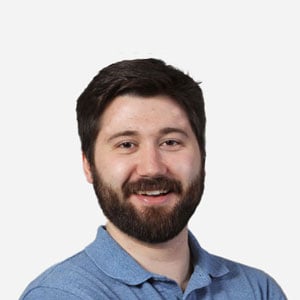
Sam Colachis, Senior Biomedical Engineer, M.S.
Mr. Colachis is a senior biomedical engineer focused on medical device research and development with over ten years of experience in neurorehabilitation technology. He leads multiple multidisciplinary engineering programs as both a Principal Investigator (PI) and a Project Manager (PM). He is a key member of the Battelle Neuro Campaign, where he serves as a PI on multiple projects and has played a major role in developing and clinically executing a neural bypass technology that restores conscious control of the fingers and hands to individuals with paralysis. In addition to his work on the Neuro Campaign, Mr. Colachis leads the Drone Assisted Rapid Triage (DART) project and the Drone-Assisted Triage Challenge. He also serves as an intellectual property steward for Battelle’s Medical Device Solutions business line and leads the Biomedical Engineering team.
Topic 2: From Muscle Signal to Movement: A Wearable, AI-Driven Platform for Neurorehabilitation
Presenter: Dave Friedenberg, Principal, Data Science and Neurotechnology, Ph.D.
For people living with stroke or spinal cord injury, regaining the use of a hand is consistently the highest recovery priority — and for those past the early months of injury, the options have historically been limited. NeuroLife®, developed at Battelle over more than a decade, takes a different approach: rather than working around the injury, it works with the body. The wearable sleeve listens for the faint neuromuscular signals a person still produces when they attempt to move, and machine learning models trained on those signals interpret what movement the person is trying to make — often from muscle activity too subtle to detect in a standard clinical exam. Targeted stimulation is then delivered through the same garment to complete the movement. This is a case where AI is not advising a clinician from the sidelines; it sits inside the therapeutic loop itself, decoding intent in a fraction of a second so the action feels like the patient's own. That distinction matters clinically, because preserving a person's sense of agency over their movement is associated with better recovery, and pairing genuine intent with task-oriented therapy is what appears to drive lasting change rather than temporary assistance.
This session shares what we have learned taking that idea from concept through clinical study. We will discuss findings from our pilot trials in chronic spinal cord injury and stroke, including improvements in hand function, what participants retained after therapy ended, and the everyday abilities they described regaining — outcomes that standardized assessments do not always capture. A second thread runs through the data: the same signals the system uses to drive stimulation also turn out to carry information about a patient's underlying capacity and trajectory, opening the possibility of using them as objective markers of who is likely to respond and how recovery is progressing — something rehabilitation has largely had to infer from periodic clinical testing.
Presenter Bio
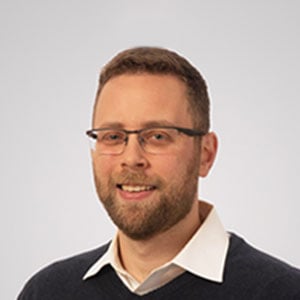
Dave Friedenberg, Principal, Data Science and Neurotechnology, Ph.D.
David Friedenberg is a Principal – Data Science and Neurotechnology in the Health Analytics group and is the principal investigator for Battelle’s NeuroLife® campaign. He operates at the intersection of artificial intelligence and device development, creating the next generation of medical devices to enhance the lives of individuals affected by neurological injuries. For the past decade, he has been building solutions using neurotechnology and machine learning to reanimate the limbs of individuals with tetraparesis and build smart medical devices for rehabilitation. He first became interested in the field when he designed the decoding algorithms for a brain-machine interface to reanimate the limb of an individual with a C5 spinal cord injury. Building from the success of that project and the potential it held, he now leads several projects both internally and externally funded, including improving the various system components to be portable and user-friendly as well as developing entirely new technologies and new applications within existing technologies. He is an author on over 33 peer-reviewed publications in the field and holds 16 U.S. patents.
David holds a Ph.D. in Statistics from Carnegie Mellon University and did his undergraduate work at Miami University. He and his wife, Jen, reside in Worthington, Ohio with their two children.