Industrial Wastewater Testing
Understand Wastewater Risk. Plan Your Next Move.
For essential users of PFAS, understanding industrial wastewater risk is becoming a business imperative. Complex industrial processes often involve short- and ultrashort-chain PFAS as well as highly variable waste streams, making characterization and analysis far more challenging than in traditional environmental settings. With evolving regulations and growing stakeholder expectations, companies need more than laboratory data; they need a path forward.
Battelle provides specialized industrial PFAS testing, scientific interpretation and strategic risk guidance to help organizations quantify impacts, validate treatment processes and abatement approaches, support compliance planning and make confident decisions that protect operations, timelines and reputation.
Specialized PFAS Analysis for Industrial Manufacturing

Complex Industrial Wastewater Analysis
Detect, quantify and characterize PFAS in complex wastewater streams with advanced analytical testing designed for manufacturing environments – informing your treatment, compliance and operational decision-making.

PFAS Source Identification
Identify and trace PFAS sources in your processes and waste streams with target, suspect and non-target analyses and Battelle’s forensics tools to support PFAS management strategies.

Lifecycle Cost Analysis
Understand and evaluate the financial implications of PFAS treatment, monitoring and mitigation pathways to help you select management approaches that maximize performance, compliance, and cost-effectiveness.

Consulting and Risk Management
Interpret complex analytical findings, evaluate regulatory exposure, and identify potential risks from an industry-specific perspective – all to develop informed action plans aligned with your organizational objectives and unique risk profile.
Total Fluorine/Total Organic Fluorine Testing
Measure total fluorine and total organic fluorine content in industrial wastewater samples beyond individual PFAS compounds to reveal potential data gaps, expose hidden fluorinated materials and support mass balance studies.

Mass Balance Studies
Track PFAS and fluorine mass balances across manufacturing processes, facility operations and treatment systems to understand treatment and destruction technology performance, operational risks and compliance gaps.
Treatment Technology Independent Validation/Verification
Measure PFAS abatement across diverse industrial wastewater streams to generate defensible performance data that enables independent, science-based assessment of PFAS treatment technology effectiveness.

Compliance Monitoring
Establish PFAS baselines, track water quality over time, and receive accredited laboratory data that helps organizations stay ahead of evolving PFAS requirements, strengthen permit compliance, and deliver high-quality reporting.
Complex Industrial Wastewater Analysis
Detect, quantify and characterize PFAS in complex wastewater streams with advanced analytical testing designed for manufacturing environments – informing your treatment, compliance and operational decision-making.
PFAS Source Identification
Identify and trace PFAS sources in your processes and waste streams with target, suspect and non-target analyses and Battelle’s forensics tools to support PFAS management strategies.
Lifecycle Cost Analysis
Understand and evaluate the financial implications of PFAS treatment, monitoring and mitigation pathways to help you select management approaches that maximize performance, compliance, and cost-effectiveness.
Consulting and Risk Management
Interpret complex analytical findings, evaluate regulatory exposure, and identify potential risks from an industry-specific perspective – all to develop informed action plans aligned with your organizational objectives and unique risk profile.
Total Fluorine/Total Organic Fluorine Testing
Measure total fluorine and total organic fluorine content in industrial wastewater samples beyond individual PFAS compounds to reveal potential data gaps, expose hidden fluorinated materials and support mass balance studies.
Mass Balance Studies
Track PFAS and fluorine mass balances across manufacturing processes, facility operations and treatment systems to understand treatment and destruction technology performance, operational risks and compliance gaps.
Treatment Technology Independent Validation/Verification
Measure PFAS abatement across diverse industrial wastewater streams to generate defensible performance data that enables independent, science-based assessment of PFAS treatment technology effectiveness.
Compliance Monitoring
Establish PFAS baselines, track water quality over time, and receive accredited laboratory data that helps organizations stay ahead of evolving PFAS requirements, strengthen permit compliance, and deliver high-quality reporting.
The Industrial Wastewater Challenge
Far more difficult to analyze than municipal wastewater, complex industrial wastewater requires focused, industry-specific PFAS analytics due to use of lesser-known short- and ultrashort-chain PFAS combined with highly diverse waste streams containing interfering co-contaminants.
If your organization operates industrial manufacturing facilities, you can count on Battelle's tailored analytical methods, accredited lab data, PFAS forensics tools and consulting expertise to help you conquer complex waste stream challenges with confidence.
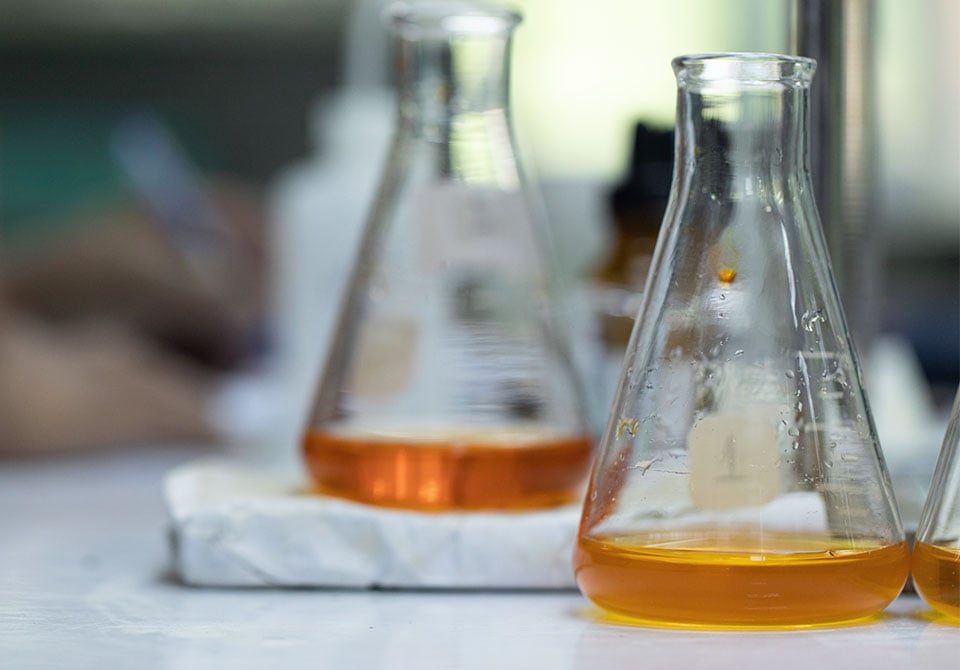
Industrial
With elements like diverse chemical matrices, organic solvents and industrial reagents, industrial wastewater often contains ultrashort-chain or polymeric PFAS. These less-evaluated PFAS can easily go undetected with standard wastewater testing.
For an accurate picture of your PFAS exposure, risk-informed companies need focused, industry-specific analytics and objective PFAS expertise to help them interpret the data and move forward effectively.
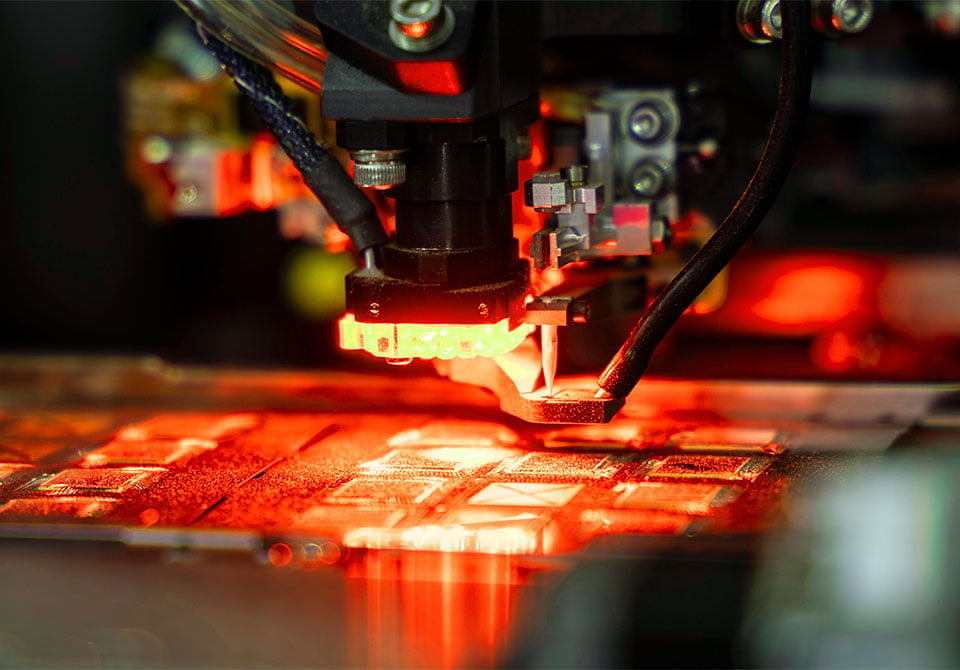
Semiconductor
Semiconductor wastewater often contains high concentrations of interfering ions, organic solvents, and process chemicals that confound standard detection and testing methods designed for municipal wastewater.
That's why accurate, applicable measurement of semiconductor wastewater requires tailored analytical methods optimized specifically for these complex waste streams.
Pharmaceutical
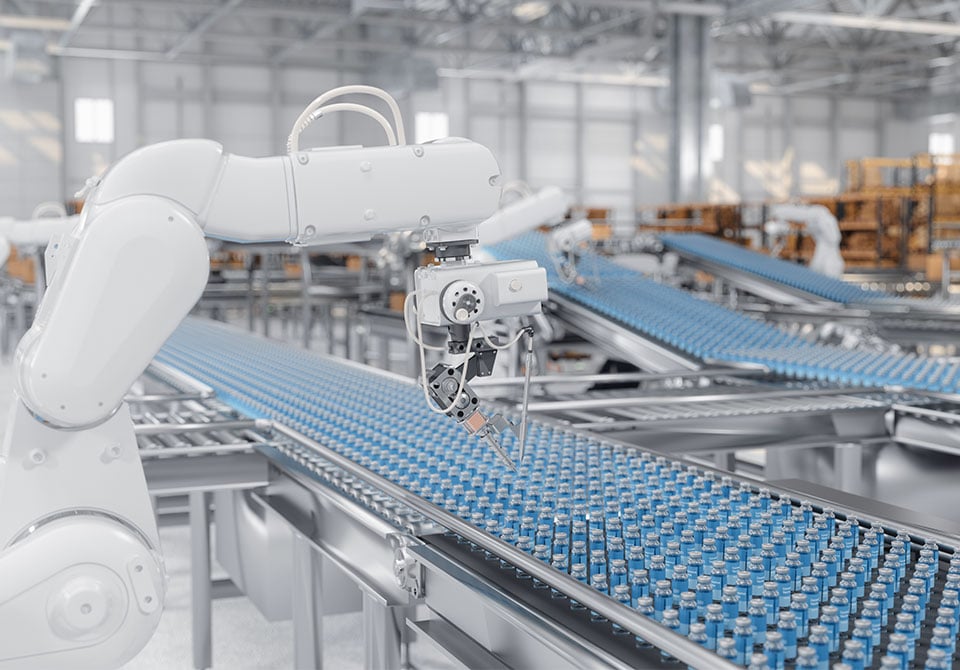
Wastewater from pharmaceutical formulation manufacturing is extremely chemically diverse, often containing fluorinated APIs, packing residuals and more - but the pharma waste streams themselves can be highly varied, from solvent-bearing streams to biological waste.
With so many potential sources and matrices, pharmaceutical manufacturers need specialized testing to identify the highest-risk materials, products, processes, and release pathways.
Featured Experts
-
Paige Jacob, Ph.D.
PFAS Chemistry Program ManagerPaige delivers client-facing leadership for research execution and consultation services, advancing Battelle’s mission to deliver innovative solutions for PFAS challenges across critical industries, including semiconductors. She brings a combination of technical expertise, strategic insight, and industry relationships that helps clients understand PFAS sources, interpret complex analytical data, and implement economically viable treatment solutions. -
Franco Pala, Ph.D.
Chemist IVFranco’s doctoral research and 24 years of analytical chemistry experience has included deep research on ever-evolving consumer product formulations and the distribution, mobilization, transport, and bioavailability of formulation chemicals after discharge in the environment. Today, Franco is driving the development of new analytical methodologies to examine the impact of PFAS and other emerging chemicals in the environment. -
Shalene Thomas, R.E.P
Sr. Emerging Contaminants Program ManagerShalene provides thought leadership, drives R&D and service offerings for Battelle’s growing PFAS and other potential emerging contaminant programs. She has more than 25 years of experience in environmental consulting that includes 15 years of experience providing PFAS strategic management services to government and commercial clients. -
Darcy Brown
Director, Commercial Business Development and Sales, Critical Infrastructure, Rare Earth, Circularity and SemiconductorDarcy has over 15 years of experience in technical sales, business development, and engineering across various industries, including agriculture, pulp and paper, power generation, and semiconductor manufacturing. He ensures exceptional customer engagement, driving success by understanding and meeting the unique needs of each client. -
Melissa Roshon
Program Manager/Research ScientistMelissa leads research and development programs that solve complex technical and environmental challenges. With more than 25 years of experience at Battelle, she brings expertise in chemistry, analytical methods, product development, and applied research, helping organizations advance abatement solutions across a range of industries, including semiconductor fabrication and pharmaceutical manufacturing.
Frequently Asked Questions
Explore answers directly from our experts for the most asked questions about industrial wastewater testing.
Related Solutions
-
 service
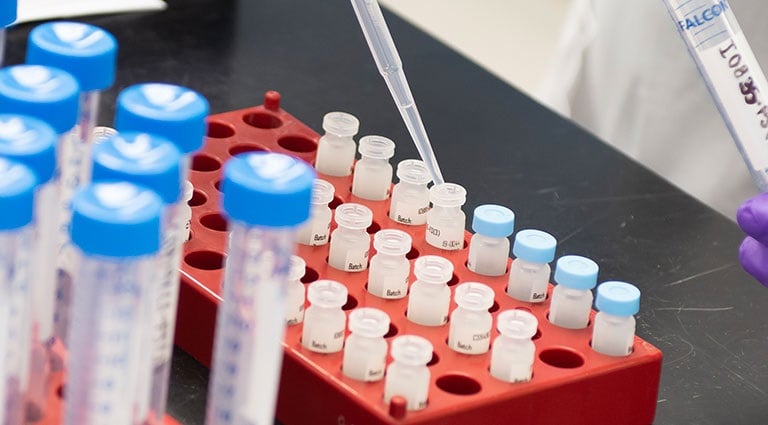
Accredited PFAS Laboratory
Our PFAS testing lab provides high-quality, defensible results with very low limits - plus new method development, process optimization and more. -
 service
PFAS SIGNATURE® Advanced Analytics Tool
Understanding the specific signatures of PFAS analytes in different matrices to deduce information about their sources. -
 service
PFAS Insight® Passive Sampling Technology
Overcomes the challenges of legacy samplers to specifically work for the large variety of PFAS contaminants. -
 service
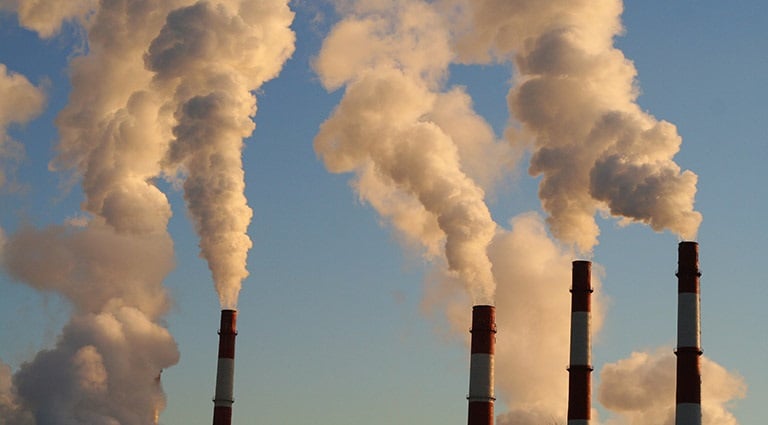
PFAS AIR INSIGHT™ Technology
Measures PFAS in ambient air to better understand potential exposures and possible human and environmental health risks. -
 service
PFAS PREDICT™ Groundwater Fate & Transport Modeling
Simulates PFAS fate and transport with unique options to scale dispersion processes based on modeling PFAS groundwater plumes. -
 product
PFAS ANNIHILATOR® Destruction Technology
Destroys PFAS and prevents them from transferring elsewhere, while not creating harmful byproducts. -
 service
Granular Activated Carbon Regeneration Technology
Regenerating GAC at groundwater and drinking water treatment facilities to save time, money and energy.